we love paros
The Vine and the Name
Parian winemaking and the meaning of Zazala
photo | specials.digital
4 minutes read

T
o understand Paros, you must first taste its soil. You’ll find it in the salt of the sea, in the curve of a fig leaf, and, perhaps most deeply, in the skin of a grape. In the local dialect of the Cyclades, “Zazala” means grape berry, the round and sun-warmed bead of fruit that begins every bottle, every feast, and every memory made around a table.Paros has long been a land of vines. Its dry climate, stony soil, and constant winds shape grapes that are resilient and full of character. Indigenous varieties like Monemvasia thrive here, producing whites that are fragrant, mineral-rich, and structured with just the right acidity to carry the island’s seafood. The local reds, often from Mandilaria, are darker, drier, and rooted in the earth they come from.
Paros vineyards are cultivated on stone terraces across schist, gneiss, and marble-rich soils, using the traditional aplotaria method, training vines low to the ground to shield them from the intense summer sun and Meltemi winds. Monemvasia, originally from the Peloponnese, has found a second home here, offering citrus and white fruit aromas layered over mineral undertones, thanks to careful pre-fermentation maceration and early harvest to protect its delicate acidity. Mandilaria, on the other hand, provides depth and structure in red blends, with its dark fruit and peppery finish, resilient in Paros’ poor clay-sand soils
Tradition & Continuity at Moraitis
At Moraitis Winery, founded in 1910 by Manolis Moraitis and still family-run today, local terroir and heritage are at the heart of every bottle. The estate spans over a land of indigenous vineyards, cultivated organically using ancient techniques and aplotaria*, ensuring that each wine reflects the island’s mineral soul. Their flagship Paros Reserve Red merges 75% Mandilaria with 25% Monemvasia, aged in oak barrels, balancing deep flavors with freshness. Visiting the winery today is a journey through generations, a living archive of stone terraces, copper stills of early souma-making, and a wine museum that celebrates both history and innovation.
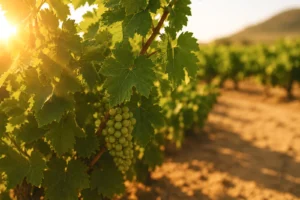
One look at a “Zazala” grape cluster, it could be white or red, shows how the island, like its vines, is defined by resilience, heritage, and light. And in every sip, Zazala honors that lineage.
* Aplotaria
In Paros, vines are often cultivated using the traditional method known as aplotaria, a system in which each vine grows low to the ground, untethered by wires or supports. Instead of climbing, the plant spreads outward in loose, circular forms. This ancient approach is uniquely suited to the Cycladic climate: it protects the grapes from the harsh summer sun, shields them from the fierce Meltemi winds, and helps conserve precious moisture close to the soil surface.
Unlike the basket-shaped “kouloura” pruning seen in Santorini, Parian aplotaria appears informal and open, more like wild shrubs than manicured rows. But this freedom is deceptive: the deep roots draw nutrients from limestone, marble, and volcanic traces, and the scattered canopy casts shade where it’s needed most. The resulting fruit is small, concentrated, and mineral-rich, expressing the land with clarity and resilience. It’s a way of growing that speaks not of control, but of quiet adaptation.