we love paros
Towers of Light
The lighthouses of Paros and their Cycladic solitude
zazala team
photo: Carlo Pelagalli – Wikimedia
3 minutes read

S
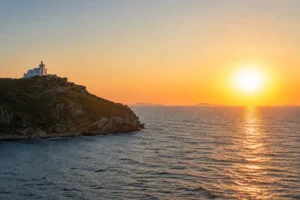
cattered across the edges of Paros like stone sentinels, the island’s lighthouses are more than maritime infrastructure, they are architectural markers of silence and memory. Built to guide ships, they now also guide those who seek stillness and a sense of place.The most iconic is the Cape Korakas Lighthouse, located inside Paros Park at the northwestern tip of the island. It was erected in 1887 for the French Company of Ottoman Lighthouses, the private concession that modernised navigation across the Aegean before Greek independence solidified its own light-house service.
Its square, white-stone tower is modest, just 10 m tall, but the headland lifts the lantern to a 60 m focal plane, pushing a three-second white flash 17 nautical miles into the channel between Paros and Syros. A low keeper’s house, cistern and storerooms still cling to the rock, testimony to the era of kerosene lamps and weekly supply runs. Today a 3 km cliff path replaces the mule track; hikers reach the plinth in time for sunset, when the revolving lens throws a measured slice of gold across Naoussa Bay and the surrounding cliffs glow like warm marble.
To the south, the Agios Fokas Lighthouse guards the south-western approach to Parikia harbour. Built in 1867 (also by the French concession) and later absorbed into the Hellenic Navy’s Lighthouse Service, the circular masonry tower rises only 6–10 m, but its low peninsula sets the beam at 11–14 m above sea-level, exactly where incoming captains need a first reference before lining up the channel buoys.
The derelict keeper’s cottage, roof tiles long gone, frames the tower like a monochrome photograph. Tourists and locals arrive on foot from Marcello beach with picnics and sketchbooks, the rumour of schooner bells drifting over the bay.
Time Measured in Three-Second Flashes
Though most are now automated and no longer manned, they remain places of encounter, where travellers measure time not in minutes but in flashes, rhythms that outlast summer crowds and remind us that solitude, too, can be part of the Cyclades’ bright grammar.